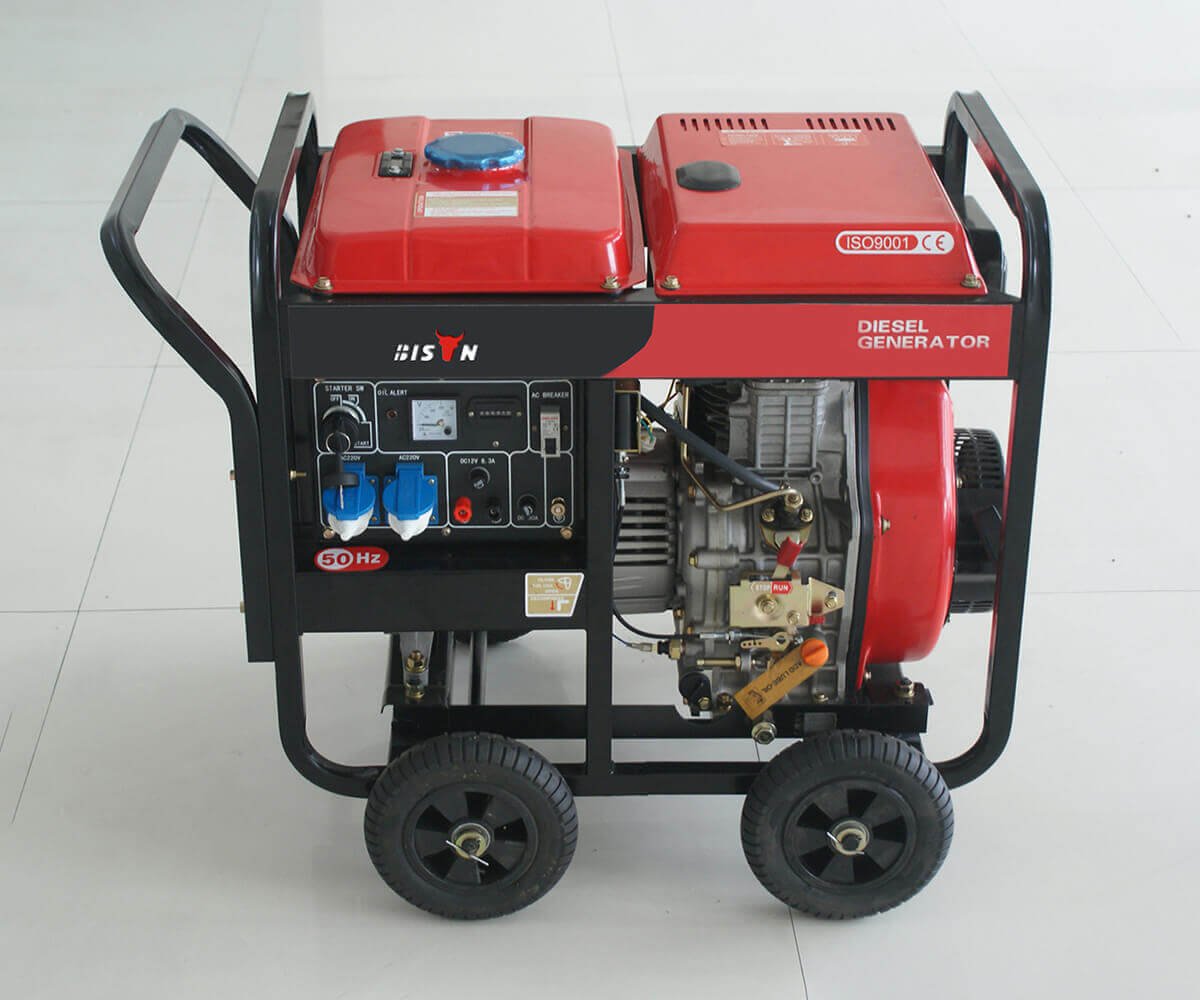
When the lights go out, or your remote operations need a steady hand, few things inspire more confidence than a reliable power source. And for many, that source is a small diesel generator. But choosing the right one isn't just about picking the first model you see; it's a strategic decision that impacts everything from your budget and operational efficiency to your peace of mind.
This guide is designed to cut through the jargon and empower you with the knowledge to make an informed choice. We'll explore the essential criteria for Choosing the Right Small Diesel Generator, ensuring you invest in a solution that’s truly fit for purpose, whether it's for home backup, a busy worksite, or off-grid living.
At a Glance: Key Takeaways for Your Diesel Generator Search
- Know Your Power Needs: Precisely calculate wattage for all desired equipment, accounting for startup surges.
- Diesel vs. Gas: Understand why diesel offers superior longevity, fuel stability, and efficiency for sustained use.
- Size Matters: Small diesel generators typically range from 2,000 to 10,000 watts, ideal for moderate demands.
- Noise & Location: Consider open-frame vs. enclosed models, especially for residential or urban areas.
- Emissions & Regulations: Factor in modern standards (like EPA Tier 4) for environmental compliance and fuel efficiency.
- Maintenance & Support: Prioritize brands with solid warranties, readily available parts, and responsive service.
- Future-Proofing: Add a 10-20% buffer to your current power needs to accommodate growth.
Why Small Diesel Generators Stand Apart: Beyond Just Power
Before diving into the nuts and bolts of selection, it’s worth understanding why small diesel generators often come out on top for certain applications. While gasoline generators might be lighter or have a lower upfront cost, diesel engines offer a distinct set of advantages, making them a wise long-term investment for those prioritizing durability, efficiency, and reliability.
- Unmatched Fuel Efficiency and Safety: Diesel generators burn compressed fuel, a process that inherently boosts thermal efficiency. This means more power for less fuel, directly translating to lower operational costs over time. Furthermore, diesel fuel is less volatile than gasoline, significantly reducing the risk of fire and making it safer for storage and use in demanding environments.
- Superior Fuel Stability: For emergency preparedness or remote locations, the ability to store fuel for extended periods without degradation is crucial. Diesel fuel boasts a longer shelf life compared to gasoline, ensuring your power source is ready when you need it most, even after prolonged periods of inactivity.
- Built to Last: Longevity & Lower Maintenance: Diesel engines are workhorses, engineered with sturdier internal components and higher compression ratios. This robust construction leads to a longer operational lifespan and extended maintenance intervals, saving you time and money on upkeep. Many users praise their minimal maintenance needs and ability to handle heavy tools during prolonged outages.
- A Greener Footprint: Modern advancements mean today's small diesel generators are far more environmentally friendly than their predecessors. Many models now comply with stringent emission standards, such as EPA Tier 4 Final, drastically reducing particulate matter and nitrogen oxides. If you're keen on [understanding modern emission standards], these advancements are significant.
- Versatility in Extreme Conditions: From the scorching heat of a construction site to the chilling damp of disaster relief operations, diesel generators are designed to perform. Their rugged construction allows them to operate reliably across a broad spectrum of temperatures and humidity levels, making them a go-to choice for telecom equipment, refrigeration units, and critical infrastructure. This adaptability is a key factor that sets [diesel generators' advantages over gasoline models] apart.
Despite these benefits, it’s fair to acknowledge a few common points of friction: older diesel models can be harder to start in cold weather, and they tend to be heavier and potentially noisier than comparable gasoline inverter generators. Finding authorized service centers in very rural areas can also sometimes be a challenge. But for many, these trade-offs are minor when weighed against the profound advantages.
Step 1: Pinpointing Your Power Needs – The Wattage Math
This is arguably the most critical step in [calculating your exact power requirements]. Underestimate your needs, and you'll face constant overloads and frustration. Overestimate significantly, and you'll waste money on an oversized unit that consumes more fuel than necessary.
Start by making a comprehensive list of all the appliances, tools, and systems you intend to power simultaneously. Don't forget critical items that might not immediately come to mind, like your furnace fan, well pump, or medical devices.
For each item, identify two key wattage figures:
- Running Watts (or Rated Watts): This is the power an appliance continuously draws once it's already running.
- Starting Watts (or Peak/Surge Watts): Many motor-driven appliances (refrigerators, air conditioners, power tools) require a brief, higher burst of power to start up. This surge can be 2-3 times their running wattage.
How to Calculate:
- List all "must-run" items and their running watts. Sum these up.
- Identify the item with the highest starting wattage.
- Add the total running watts to the highest single starting wattage from your list. Do NOT add all starting wattages together, as appliances typically cycle on and off, not all starting simultaneously.
Example: - Refrigerator: 800 running watts / 2000 starting watts
- Well Pump: 1000 running watts / 3000 starting watts
- Lights, TV, computer: 700 total running watts
- Total running watts (if all on): 800 + 1000 + 700 = 2500 watts
- Highest starting wattage: Well Pump at 3000 watts
Your generator needs to handle at least 2500 (running) + 3000 (highest surge) = 5500 watts.
The 10-20% Buffer Rule: Once you have your calculated wattage, add an additional 10-20% to that figure. This buffer accounts for future needs, unexpected loads, and ensures your generator isn't constantly running at its absolute maximum, which can extend its lifespan. So, for our 5500-watt example, you'd look for a generator in the 6050-6600 watt range.
Small diesel generators typically fall within the 2,000 to 10,000-watt range, making them perfect for residential backup, remote workshops, RVs, and mobile operations that don't require industrial-scale power.
Step 2: Generator Type & Operational Demands
While Article 1 mentions standby, prime, and continuous power, for small diesel generators, you'll primarily be choosing between standby and prime power applications, even if the generator unit itself might technically be capable of continuous operation in a different context.
- Standby Generators (Emergency Use): These are ideal for home backup during power outages or for critical systems (e.g., medical clinics) where power loss is unacceptable. They're designed to kick in automatically (with an Automatic Transfer Switch or ATS) when grid power fails and run for the duration of the outage. They might not run continuously for weeks on end, but they offer crucial, immediate backup.
- Prime Power Generators (Frequent Use/Off-Grid): If you're operating a construction site, a remote cabin, or any application where grid power is either unavailable or unreliable, a prime power generator is your solution. These units are built to run for extended periods, providing the main source of electricity. They're robust and designed for the rigors of frequent, demanding use.
The key is matching the generator's design intent to your operational demands. Don't use a standby unit as a daily prime power source, and vice-versa, unless the manufacturer explicitly rates it for both.
Step 3: Noise, Space, and Placement Considerations
Diesel generators, particularly open-frame models, can be noisy. This is a significant factor, especially if you're in a residential area, a quiet worksite, or an RV park.
- Noise Output: Look for models with a noise rating below 70 dB (decibels) for urban or residential use. To put that in perspective, 70 dB is roughly the sound level of a vacuum cleaner. Many modern small diesel generators come in two main configurations:
- Open-Frame Designs: These expose the engine, allowing for better cooling. However, they are generally noisier and lack protection from the elements. They are often more cost-effective.
- Enclosed (Canopy) Models: These feature a sound-dampening shell that significantly reduces noise output. They also provide weather resistance, making them suitable for outdoor placement. They are typically heavier and more expensive but offer a far more user-friendly experience in populated areas. If quiet operation is a priority, consider [strategies for quieter generator operation].
- Physical Space & Installation: Generators require adequate space for operation, ventilation, and maintenance.
- Ventilation: Proper airflow is essential to prevent overheating and to safely disperse exhaust fumes. Never operate a generator indoors or in an enclosed space without proper ventilation and exhaust routing.
- Maintenance Access: Ensure you can easily reach all service points for routine tasks like oil changes, filter replacements, and inspections.
- Weatherproofing: If placed outdoors, an enclosed model provides built-in protection. For open-frame units, you'll need a suitable shelter or enclosure that allows for ventilation while protecting against rain, snow, and excessive dust.
- Regulatory Compliance: Always check local noise ordinances and emission standards. Many areas have strict rules about generator operation, especially in residential zones. Ensure your chosen model complies with these regulations to avoid fines or disputes.
Step 4: Fuel Efficiency, Emissions, and the Environment
Modern small diesel generators are far more advanced than their predecessors. When evaluating models, pay close attention to:
- Fuel Efficiency: Look for features like advanced fuel injection systems and turbocharging, which can dramatically improve fuel economy. A more fuel-efficient generator means longer runtimes between refueling and lower operating costs.
- Emission Standards: Compliance with current emission standards (e.g., EPA Tier 4 in North America, CPCB IV+ in India, or equivalent regional standards) is not just about regulatory adherence; it signifies a more technologically advanced and often more fuel-efficient engine. These standards reduce particulate matter and nitrogen oxides, lessening your environmental impact.
- Fuel Storage and Delivery: A consistent and secure fuel supply is paramount. Consider your options for on-site diesel storage. Diesel's excellent shelf stability is a major advantage here, but proper storage (cool, dry, dark conditions, stabilized if stored for very long periods) is still important for ensuring optimal performance when needed.
Step 5: Essential Features and Safeguards
Beyond raw power, the right small diesel generator comes equipped with features that enhance safety, ease of use, and overall reliability.
- Electric Start: A crucial convenience, especially for larger units. While some smaller models might still offer pull-start, electric start is almost a standard expectation for generators in this category.
- Automatic Shut-down: Safety features are non-negotiable. Look for automatic shutdown mechanisms that activate in case of low oil pressure, high engine temperature, or carbon monoxide (CO) detection. A CO safety shutdown is particularly vital if there's any risk of fumes accumulating.
- Digital Control Panel: These panels offer easy monitoring of critical parameters like voltage, frequency, hours of operation, and fuel levels. Many also include diagnostic codes, simplifying troubleshooting.
- Automatic Voltage Regulation (AVR): This feature ensures a consistent and stable power output, protecting sensitive electronics from voltage fluctuations.
- Remote Monitoring and Auto-Start: For standby applications, remote monitoring allows you to check your generator's status from anywhere. Auto-start, paired with an ATS, ensures your home or business automatically switches to generator power during an outage without manual intervention.
- Weather-Resistant Enclosures: As mentioned, these are vital for outdoor placement, protecting the generator from the elements and often contributing to noise reduction.
- Proper Grounding and Fire Safety: Ensure the generator has clear instructions and provisions for proper grounding. Check for relevant fire safety certifications.
Step 6: Brand Reputation, Support, and Longevity
Investing in a small diesel generator is a significant decision, and you want it to last. This means looking beyond the sticker price.
- Reputable Brands: Choose manufacturers known for reliability and quality construction. Research brand reviews, particularly those from long-term users.
- Warranty and After-Sales Support: A strong warranty signals a manufacturer's confidence in their product. Just as important is accessible and responsive after-sales support, including readily available spare parts and technical assistance. Inquire about maintenance contracts if continuous uptime is critical.
- Authorized Dealers and Service Centers: Knowing where to get your generator serviced or find replacement parts can be a lifesaver. Ensure there are authorized dealers or service centers within a reasonable distance, especially if you live in a rural area. User reviews sometimes highlight challenges in finding authorized service in remote locations.
- Voltage and Frequency: If purchasing internationally or from a specialized supplier, ensure the generator's voltage and frequency (e.g., 120V/60Hz for North America, 230V/50Hz for Europe) match your regional grid and equipment requirements.
For bulk orders or highly specialized needs, consider contacting industrial suppliers or distributors directly. They often have expertise and inventory beyond what's available through standard retail channels.
Step 7: Protecting Your Investment with Proper Care
Once you've made your choice, ensuring your small diesel generator performs reliably for years to come hinges on consistent, proactive maintenance. [Extend your generator's lifespan with proper care] through these essential practices:
- Regular Oil and Filter Changes: Adhere strictly to the manufacturer's recommended schedule for oil and oil filter changes. Dirty oil is a leading cause of engine wear.
- Fuel Tank Management: Keep the fuel tank full (especially in humid environments) to prevent condensation, which can lead to water in the fuel and potential fuel system issues. Use a diesel fuel stabilizer if the generator will be stored for extended periods.
- Air Filter Cleaning/Replacement: A clean air filter is crucial for engine efficiency and longevity. Inspect and clean or replace it according to the manual.
- Inspect Electrical Connections: Periodically check all electrical connections for tightness and signs of corrosion.
- Monthly Testing: Start and run your generator under a moderate load for 15-30 minutes at least once a month. This lubricates components, circulates fluids, and keeps the battery charged, ensuring it's ready for action.
- Cleanliness and Storage: Keep the generator clean and free of debris. Store it in a dry, well-ventilated area, protected from extreme temperatures and moisture.
Your Next Step: Confident Power
Choosing the right small diesel generator requires a thoughtful approach, but by systematically evaluating your power needs, considering the operational environment, and prioritizing features like efficiency, safety, and brand support, you can make a decision with confidence.
Remember, a generator isn't just an appliance; it's an investment in uninterrupted power, peace of mind, and operational continuity. Take the time to do your research, consult with experts if needed, and choose a generator that will reliably serve your specific needs for years to come.
Ready to explore your options further? [Explore small diesel generators] to find the perfect match for your requirements.
Untuk pemahaman lebih lengkap, baca panduan utama kami: Explore small diesel generators