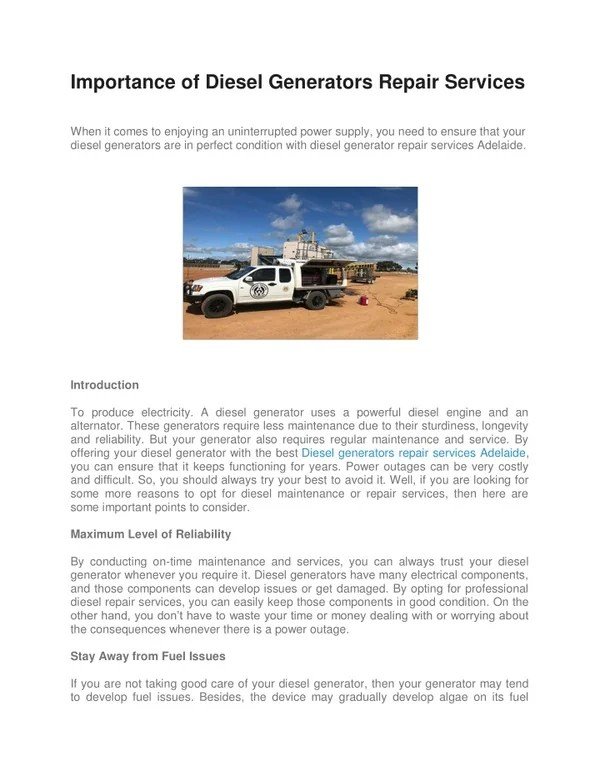
When the grid goes dark, a small diesel generator can be a lifeline, powering everything from essential home appliances to critical business operations. But harnessing this power isn't as simple as plugging it in and hitting a switch. Proper installation, operation, and safety for small diesel generators are paramount – not just for the unit's longevity and efficiency, but for the safety of everyone around it. This isn't just about following a manual; it's about understanding the nuances that turn a powerful machine into a reliable, safe, and cost-effective backup solution.
We're going to pull back the curtain on everything you need to know, from selecting the right model to advanced fuel management and emergency preparedness. Consider this your definitive guide to becoming a confident, competent diesel generator owner or operator.
At a Glance: Key Takeaways for Diesel Generator Management
- Size it Right: Always match generator wattage (constant and surge) to your specific load requirements to avoid underpowering or overloading.
- Outdoor Only: Never operate a generator indoors or in partially enclosed spaces due to the lethal risk of carbon monoxide.
- Grounding is Gold: Proper grounding protects against electrical shock. Ensure the generator frame and all external conducting parts are correctly earthed.
- Connect Safely: Always link your generator to your electrical system via an automatic transfer switch (ATS) to prevent dangerous backfeeding into the utility grid.
- Optimal Load: Aim for 70-80% of max load for efficiency and to prevent "wet stacking" – a common diesel engine issue.
- Regular Maintenance: Adhere to manufacturer-recommended schedules for oil changes, filter replacements, and system checks to ensure reliability and extend lifespan.
- Fuel Vigilance: Monitor fuel quality, manage storage conditions, and follow safe transfer protocols to prevent contamination and fire hazards.
- Emergency Ready: Keep batteries charged, understand your control panel, and have a clear fire response plan in place.
Powering Up: Choosing and Installing Your Diesel Generator
The journey to reliable backup power begins long before you turn a key. It starts with careful selection and meticulous installation. Getting these foundational steps right sets the stage for years of safe and efficient operation.
Selecting the Perfect Power Partner
Before you even unpack a box, you need to know what you're asking your generator to do. This means a careful assessment of your power needs.
- Calculate Your Constant Wattage: List every appliance and piece of equipment you intend to run simultaneously. Sum their individual wattages. This is your "constant wattage"—the power your generator needs to supply continuously.
- Account for the Surge: Many motor-driven appliances (refrigerators, pumps, HVAC units) demand significantly more power to start than to run. This initial burst is called "start-up wattage" or "surge." It can be up to three times their constant wattage. Your chosen generator must have a "surge rating" that comfortably exceeds the cumulative start-up wattage of all motor-driven devices you might kick on simultaneously.
- Match the Voltage: This might seem obvious, but it's crucial. Ensure the generator's voltage output perfectly matches the voltage requirements of your equipment and appliances (e.g., 120V, 240V). Mismatched voltages can damage sensitive electronics or even the generator itself.
Choosing the right size is not just about convenience; it's about efficiency and longevity. An undersized generator will struggle and potentially fail, while an oversized one will often run at too low a load, leading to other issues we'll discuss later. If you're looking for more general insights into these powerful machines, you can always Learn about small diesel generators.
From Crate to Commission: The Installation Process
Once you've made your selection, it's time for the physical setup. Think of installation as building a secure, stable foundation for your power source.
- Unpack and Inspect: Carefully unpack the unit. Take a moment to thoroughly inspect it for any shipping damage. Document anything suspicious immediately.
- Verify Capacity: Double-check that the generator's rated amperage and wattage capacity still align with your calculated load requirements. It’s better to catch an oversight now than during a blackout.
- Strategic Positioning: Outdoors is Non-Negotiable:
- Location, Location, Location: Your generator must be positioned outdoors. This is not a suggestion; it's a critical safety rule. Exhaust fumes contain carbon monoxide (CO), a colorless, odorless, and highly toxic gas that can be lethal.
- Protective Enclosure: While outdoors, consider a protective enclosure. This shields the unit from weather, reduces noise, and offers security, but it must allow for unobstructed airflow for cooling and ventilation. Never place a generator in a garage, shed, or any partially enclosed space.
- Proximity Matters: Install the generator close to your automatic transfer switch (ATS) and fuel supply. This minimizes cable runs and simplifies fuel line connections.
- Grounding for Safety: This step is vital for electrical safety. Utilize the provided grounding lug on the generator frame. All external conductive parts of the generator must be properly grounded (earthed) to prevent electrical shock in case of a fault. This usually involves driving a grounding rod into the earth and connecting it with heavy-gauge wire to the generator's grounding lug.
- Battery Prep: Fully charge all batteries before insertion and connection. A weak battery is the most common reason a generator fails to start when needed.
- Transfer Switch Installation: Exercise similar care when unpacking and installing your automatic transfer switch. The ATS is the brain that safely manages the transition between utility power and generator power.
- The Critical Connection: Via ATS Only: Your generator must connect to your utility electrical system solely via an automatic transfer switch. This device automatically disconnects your home from the utility grid before connecting the generator. This is crucial for two reasons:
- Prevents Backfeeding: It stops electricity from flowing back into the utility lines, which could electrocute utility workers attempting to restore power.
- Protects Your Generator: It prevents your generator from being damaged when utility power is restored.
Safety First, Always: Guarding Against Hazards
Operating a small diesel generator comes with inherent risks, but almost all of them can be mitigated with strict adherence to safety protocols. Your generator's manual is your primary guide; always follow its instructions for installation, repair, and maintenance.
The Silent Killer: Carbon Monoxide
We mentioned it during installation, but it bears repeating: exhaust fumes contain life-threatening carbon monoxide.
- Outdoor Operation Only: This cannot be stressed enough. Never run a generator indoors, in a garage, shed, carport, or any enclosed or partially enclosed space. Even with open doors and windows, CO can build up to deadly levels.
- Proper Ventilation: Ensure the generator's exhaust is directed away from all windows, doors, and vents that could allow fumes to enter occupied buildings.
- CO Detectors: Install battery-operated carbon monoxide detectors with alarms in your home or any adjacent structures. Test them regularly.
Electrical Vigilance: Shock-Proofing Your Setup
Electricity and water don't mix, and neither do faulty connections and human safety.
- De-Energize Before Service: Always turn off all power voltage supplies at the source (including the generator itself and the utility main) during installation or any servicing. Lock out/tag out procedures are best practice.
- Insulate and Cover: Ensure all electrical connections—wires, cables, and terminals—are properly insulated and covered to prevent accidental contact.
- Grounding is Non-Negotiable: Reiterate that the generator frame and any external conducting parts must have proper grounding/earthing. This provides a safe path for fault current, preventing electrocution.
- Right Wires for the Job: Use wiring, cables, and cord sets of the recommended capacity for your generator and loads. Undersized wires can overheat, leading to fire or equipment damage. Never use damaged or frayed cords.
Fire and Explosion Prevention: Keeping it Cool
Diesel fuel, while less volatile than gasoline, is still a flammable substance. Combined with heat from the generator, it creates a significant fire risk.
- No Smoking Zone: Absolutely prohibit smoking near the equipment, especially during fueling or maintenance.
- Cleanliness is Key: Maintain a clean area around the generator, free of clutter, dry leaves, debris, and, critically, combustible materials. Clear a perimeter of at least 3-5 feet around the unit.
- Spill Control: Fuel or oil spills, even small ones, significantly increase the explosion risk. Clean up any spills immediately and thoroughly.
- Fire Extinguisher Ready: Always keep a suitable fire extinguisher (rated for electrical and flammable liquid fires, typically a Class B:C or A:B:C extinguisher) readily available and ensure you know how to use it.
- Regulatory Compliance: Storage sites for fuel must comply with all local and federal fire regulations.
- Response Plan: For larger installations, implement a comprehensive fire response plan, including suppression systems, regular training, and clear labeling of shut-off points.
Regular Inspections: Your First Line of Defense
Safety isn't a one-time setup; it's an ongoing commitment.
- Pre-Operation Checks: Before each use, quickly inspect the unit for any visible damage, leaks, or loose connections.
- Prompt Repairs: Promptly replace any defective or damaged parts. Do not operate a compromised generator.
- Hands Off When Running: Never open or dismantle the unit while it is functioning. Wait for it to cool down before performing any inspections or maintenance.
Mastering Operation: Efficiency, Longevity, and Smart Management
Running your small diesel generator effectively goes beyond just starting it up. It involves understanding its optimal operating parameters, adapting to environmental conditions, and leveraging modern technologies for peak performance.
Optimal Load Management: The 70-80% Sweet Spot
Diesel engines thrive under load. Unlike gasoline engines, which can tolerate idling more readily, diesel generators prefer to work.
- Avoid "Wet Stacking": Aim to run your generator at 70-80% of its maximum load for optimal fuel efficiency and engine health. Running at minimal loads or idling for extended periods can lead to "wet stacking." This occurs when unburned fuel accumulates in the exhaust system, forming a sticky, carbonaceous residue. Wet stacking reduces efficiency, can foul injectors, and eventually cause engine damage and decreased performance.
- Understand kVA Rating: Generators are often rated in kVA (kilovolt-amperes), which is the apparent power. To get actual power in kilowatts (kW), multiply kVA by the power factor (typically 0.8 for most generators). Overloading your generator (exceeding its kVA/kW rating) causes overheating, excessive wear, and dramatically reduces its lifespan. Use a load bank if you need to test the generator at a specific load or "exercise" it under load when your natural load is insufficient.
Adapting to the Environment: Elevation and Temperature
Your generator's performance isn't static; it's influenced by its surroundings.
- Elevation's Impact: Higher elevations mean thinner air, which reduces combustion efficiency in diesel engines. As a rule of thumb, generators are derated by approximately 3-3.5% for every 1,000 feet above 500 feet elevation. If you operate at significant altitude, you'll need a larger generator to achieve the same power output as at sea level.
- Temperature Extremes: Extreme temperatures—both hot and cold—can affect performance. Hot temperatures can lead to overheating, while cold temperatures can make starting difficult and impact fuel viscosity. Ensure proper coolant levels and use appropriate engine oils for the expected temperature range. Block heaters are crucial for cold-weather starts.
The Power of Proactive Maintenance: Keeping the Heart Pumping
A well-maintained generator is a reliable generator. Skipping maintenance is a gamble you don't want to take when the lights go out.
- Follow the Schedule: Strictly adhere to the manufacturer's annual, semi-annual, or quarterly maintenance schedules. This isn't just a suggestion; it directly enhances equipment reliability and extends its life.
- Key System Inspections: Regular checks should include:
- Cooling System: Check coolant levels, hoses, and radiator for leaks or blockages.
- Air Intake & Cleaner: Inspect and replace air filters as needed to ensure clean airflow.
- Fuel System: Check fuel lines, filters, and tanks for leaks or contamination.
- Exhaust System: Inspect for leaks, cracks, and proper routing.
- Electrical System: Check wiring, terminals, and connections for corrosion or damage.
- Annual Rituals: Annually, at a minimum, change the engine oil and all filters (oil, fuel, air).
- Controls and Calibration: Inspect controls such as voltage regulators, relays, and monitors. Adjust transfer switch time delays and reset exerciser clocks as necessary.
- Performance Monitoring: Keep an eye on key performance parameters like A.C. output voltage and frequency. Deviations can indicate underlying issues. Adhering to the manual's guidelines ensures safe and optimal use.
Modern Monitoring: Your Generator's Digital Eye
Today's small diesel generators are often sophisticated pieces of equipment, featuring advanced remote monitoring capabilities.
- Real-Time Insights: Utilize modern gensets' advanced remote monitoring systems to track performance, fault conditions, and fuel levels in real-time. This provides invaluable data, allowing you to catch minor issues before they become major problems.
- Automation and Efficiency: Remote monitoring enables automation (e.g., automatic start/stop for exercising), enhanced efficiency through optimized run times, and increased reliability by signaling potential issues early.
- Remote Troubleshooting: In many cases, these systems even allow for remote troubleshooting, potentially saving a service call.
Considering Parallel Power: Redundancy and Flexibility
For larger or more critical applications, consider linking multiple generators in parallel.
- Redundancy: If one generator fails, the others can pick up the slack, ensuring continuous power.
- Precise Load Management: Parallel generators allow you to match power output more closely to demand, leading to enhanced efficiency and reduced wear on individual units. You can run only the generators needed for the current load, shutting down others to save fuel and reduce engine hours.
Fueling Your Future: Smart Storage and Transfer
Diesel fuel is the lifeblood of your generator, but it's not a "set it and forget it" commodity. Proper fuel management is crucial for reliability and safety.
Fuel Quality is King: Preventing Contamination
Contaminated fuel is a common culprit behind generator failures.
- Regular Checks: Perform regular fuel quality checks. This involves sampling and analyzing fuel purity for water, microbial growth ("diesel bug"), and particulate contaminants.
- Adjust Filtration: Based on analysis, adjust your filtration strategy as needed. Modern generators often have multiple stages of fuel filtration, but external filtration for bulk storage is also important. Contaminants not only reduce efficiency but can also severely damage fuel injectors and other critical engine components.
Storage Smarts: Protecting Your Investment
Where and how you store your fuel matters significantly.
- Environmental Control: Monitor humidity and temperature in storage facilities to prevent fuel degradation and condensation. A climate-controlled environment is highly beneficial for long-term fuel stability.
- Inventory Management (FIFO): Use an inventory tracking system, ideally a "First-In, First-Out" (FIFO) approach, to avoid long-term storage problems. Diesel fuel can degrade over time, especially with prolonged exposure to air and light.
- Smart Storage Tanks: Consider smart storage tanks equipped with sensors. These can automate fuel level monitoring, trigger reordering when supplies are low, and mitigate risks by alerting you to potential issues like water accumulation.
- Leak Detection: Regularly check pipelines and containers for tight seals. Implement advanced leak detection technology for larger systems to prevent spills, which are environmental hazards and fire risks.
Safe Fuel Handling: Transferring with Care
Moving fuel from storage to your generator tank presents its own set of safety concerns.
- Dedicated Equipment: Ensure safe fuel transfer by using dedicated hoses, pumps, and nozzles specifically designed for diesel fuel.
- Trained Operators: Only trained personnel should handle fuel transfer, understanding the risks and safety protocols.
- Automated Shut-off: Utilize automated shut-off mechanisms on pumps to prevent overfilling and spills.
- Stay Current on Regulations: Stay current on all local, state, and federal safety and handling regulations for diesel fuel.
Ready for Anything: Emergency Preparedness
The primary purpose of a backup generator is to provide power during an emergency. Being truly prepared means anticipating challenges and having systems in place to respond swiftly and effectively.
The Need for Speed: Fast Startup
When the grid fails, every second counts.
- Industrial Grade Response: High-quality industrial generators should be able to start and carry a full load within seconds of a power outage. Test your generator's start-up time regularly to ensure it meets this expectation.
- Remote Monitoring for Quick Response: Real-time remote monitoring systems are invaluable here. They enable immediate identification and response to problems, often before human operators are even aware. Modern systems can even allow for remote start-up, significantly improving response time, especially if you're not on-site.
- Battery Health is Paramount: The generator's battery is its starting heart. Maintain it in peak condition through smart chargers that prevent overcharging and keep it topped off. Regular testing of the battery's charge and cold-cranking amps ensures it will deliver when needed most.
Seamless Transitions: The Role of the ATS
The Automatic Transfer Switch (ATS) is more than just a connection point; it's your emergency power system's conductor.
- Automated Action: Integrate Automated Transfer Switches (ATS) for seamless power transitions. If utility power fails, the ATS instantly detects the loss, signals the generator to start, and once the generator is up to speed and stable, reroutes your premises' electrical load from the utility to the generator.
- Safe Restoration: When utility power is restored, the ATS safely transfers the load back to the grid and signals the generator to cool down and shut off. This entire process is hands-free and ensures there's never a dangerous cross-connection between generator and utility power.
Intelligent Load Management: Prioritizing Power
During an extended outage, conserving fuel and preventing overloads are critical.
- Prioritize Essentials: Implement smart load management systems to prioritize essential services (e.g., medical equipment, heating/cooling, water pumps, critical communications).
- Shed Non-Critical Loads: These systems can automatically shed non-critical loads (e.g., pool heaters, secondary lighting, decorative fountains) to prevent overloads, conserve fuel, and ensure your generator focuses its power where it's needed most. This extends run time and reduces stress on the generator.
User-Friendly Controls: Intuitive During Crisis
In an emergency, you don't want to be fumbling with complex controls.
- Intuitive Design: Generator control panels should be intuitive and easy to understand for quick operation during emergencies. Familiarize yourself and anyone else who might operate the generator with its control panel before an emergency strikes.
- Clear Labeling: Ensure all buttons, indicators, and emergency stops are clearly labeled and accessible.
Your Power, Your Responsibility: The Path Forward
Owning and operating a small diesel generator offers unparalleled peace of mind during power outages, but it comes with significant responsibilities. This guide has armed you with the essential knowledge for installation, operation, and safety for small diesel generators, moving you from a basic understanding to that of a confident, capable operator.
Remember, this isn't a "set it and forget it" piece of equipment. It requires respect, vigilance, and ongoing care. By meticulously following manufacturer guidelines, performing regular maintenance, prioritizing safety, and staying prepared for emergencies, your small diesel generator will be a reliable, long-lasting asset, ready to stand guard against the unexpected. Stay informed, stay diligent, and stay safe.